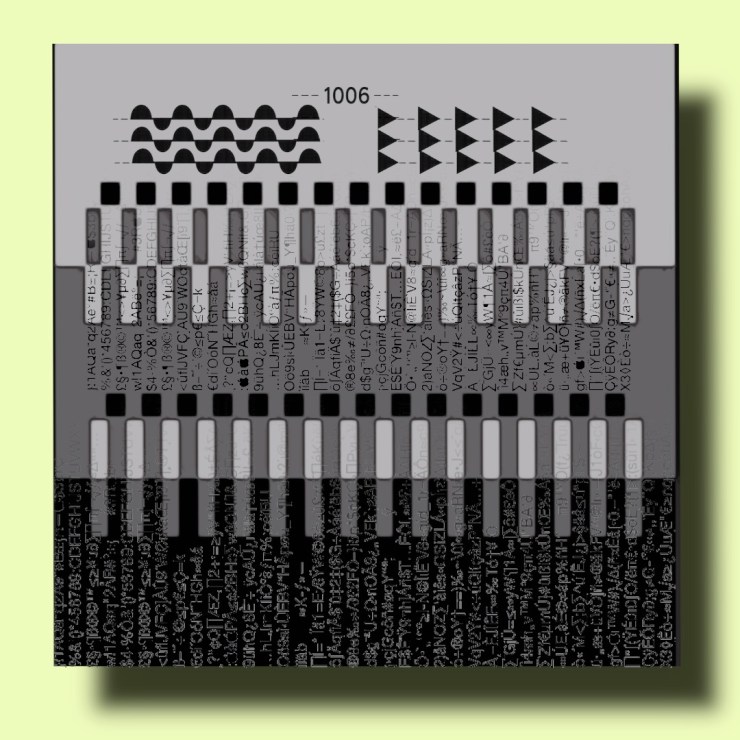
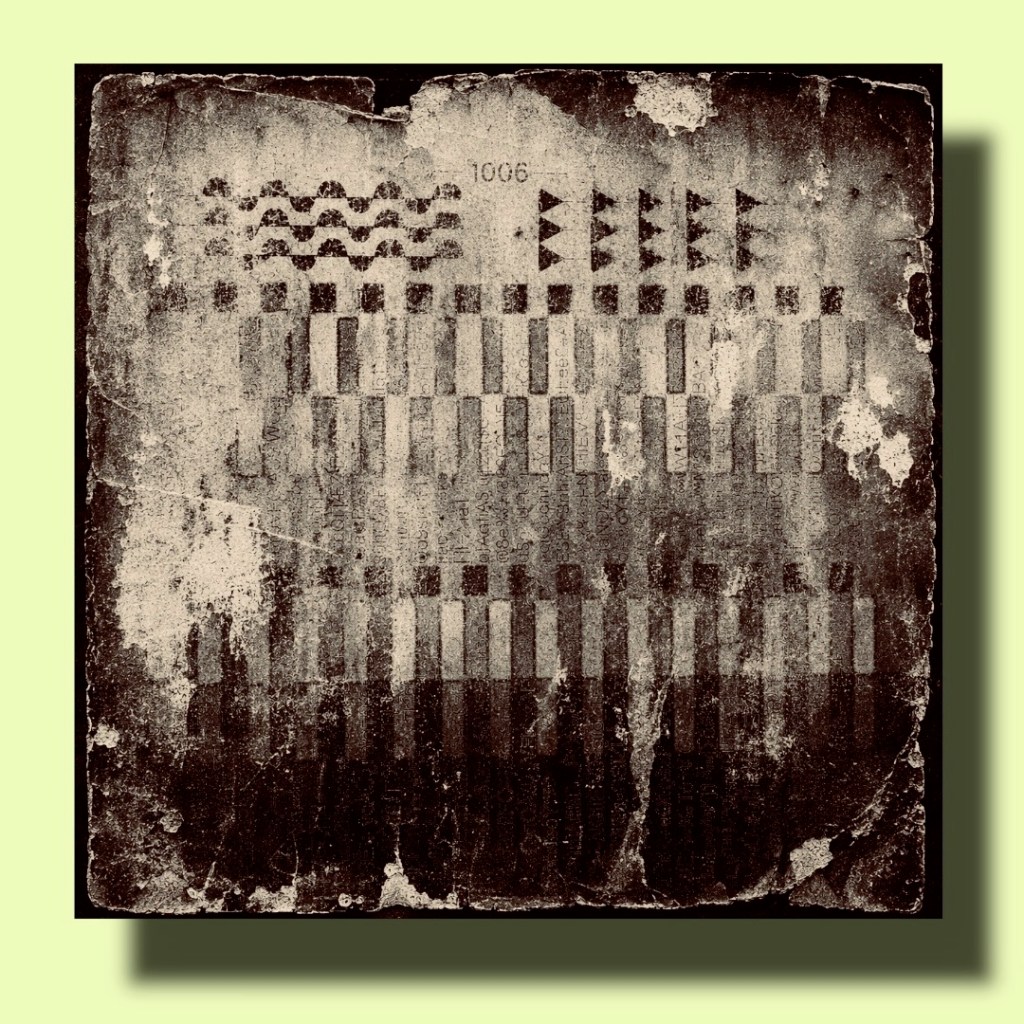
Weather #1 & Weather #2 Note:
The Department refuses to determine which of these images is the original and which is its weathered history.
Current evidence suggests that each is produced by prolonged exposure to the other.
Context always leaves a deposit, interpretation erodes and every act of looking alters the climate in which the next reading becomes possible.
For Immediate Release:
Every period invents its preferred metaphor for the understanding of society. The nineteenth century imagined society as a machine and the twentieth imagined it as a structure. The twenty-first… increasingly imagines it as a network.
The Department proposes another possibility.
Perhaps we should imagine society using meteorological weather as a metaphor, a semantic weather, where ideas gather into pressure systems and images drift across populations like atmospheric fronts. Economic decisions would produce emotional climates and political rhetoric would behave like humidity, making some thoughts less easy to breathe in than others. Suddenly, entire communities would find themselves living beneath a symbolic cloud cover whose source lies hundreds of miles away in financial markets, media infrastructures or an algorithmic recommendation system. Meaning no longer simply circulates. It can condense, evaporate, form pressure systems that produce storms or drought… and of course, it can change in an instant. Under these conditions, spectacle is not merely something we observe. It becomes the local climate and, by definition, part of the global climate in which all observation is made.
Much criticism continues to speak about spectacle as though it were something external. Perhaps a billboard, television content, the machinations of celebrity or a political rally with its attendant State response. This, of course, assumes spectacle is something one can either accept or reject. The Department’s recent observations suggest otherwise. We propose that spectacle has become environmental. It no longer persuades us by presenting extraordinary images. It succeeds because it quietly determines the conditions under which ordinary things become visible at all. This represents an important shift. Debord described spectacle as mediation but today mediation increasingly determines ontology. Things appear real because they circulate. Visibility has become mistaken for existence. Meanwhile, entire worlds simply disappear because they fail to achieve sufficient circulation. This type of Alienation was once understood as a kind of separation—workers from labour, citizens from power, etc.—but today alienation has become considerably more sophisticated. One may feel perfectly connected whilst becoming progressively more absent. As communication expands, conversation contracts. As choice proliferates, agency diminishes, and as information accelerates, understanding slows almost to stillness. Alienation, it seems, no longer requires exclusion. It frequently arrives disguised as participation. One can contribute continuously whilst the sphere of influence over the systems recording those contributions diminishes. Participation itself becomes yet another product.
Departmental Note: Enchantment under Atmospheric Conditions
When we consider enchantment, perhaps we have inherited too narrow an understanding of what enchantment actually is. It is often envisioned as a moment of wonder, mystery or aesthetic pleasure, something opposed to rationality and therefore increasingly scarce within a technologically mediated society. The Department is unconvinced. Enchantment has not disappeared… it has become infrastructural. Contemporary enchantment no longer lives only in forests, myths or religious visions. It emerges through recommendation systems, interfaces, immersive environments and the carefully engineered choreography of attention. We are invited to mistake seamlessness for magic, immediacy for intimacy and personalisation/anthropomorphism for recognition. This is not to dismiss these experiences. They are often genuinely enchanting. The difficulty lies elsewhere. Increasingly, enchantment precedes understanding. Before we can ask what something means, we have already experienced its emotional atmosphere. Feeling arrives before interpretation. Perhaps this explains why spectacle has become so resilient. It does not simply offer representations of the world, it organises the conditions under which the world becomes emotionally available. The atmosphere has already changed before criticism has had time to open its umbrella. Happily, there is another kind of enchantment, one that cannot be efficiently predicted or administered. It appears unexpectedly in conversations without audience, in artworks that refuse immediate explanation, in ideas that remain gloriously unresolved. This form of enchantment does not close interpretation by producing certainty. It provokes interpretation by generating curiosity.
Criticism was transformed by Reception theory when it insisted that meaning does not reside passively within the artwork… but emerges through the encounter between work and reader. The Department considers this one of the most significant shifts in contemporary aesthetics. Yet the conditions of that encounter have already altered significantly. The contemporary reader rarely approaches a work directly. Every encounter has already passed through innumerable systems of selection, ranking, recommendation, translation and circulation. Before interpretation begins, reception itself has already been organised. This changes the critical question. We can no longer simply ask: What does this work mean? Nor even ask: How does the reader construct meaning? But rather: Under what atmospheric conditions did this particular encounter become possible? Reception has become meteorological. Readers do not encounter isolated artworks so much as weather fronts of symbolic pressure in which countless images, headlines, memories, political assumptions, algorithms and previous readings circulate simultaneously. Every interpretation therefore carries traces of many climates extending far beyond the object itself.
Final Note: Forecast Rather than Verdict
The Department has no desire to issue a final diagnosis. Weather resists conclusion.
If spectacle has become atmospheric rather than spectacular, then criticism must also change its methods. It must learn instead to observe changing climates, identify emerging pressure systems and recognise those moments when language itself becomes unstable. This is not a retreat from politics but an expansion of it. Political life now unfolds as much through the management of perception as it does through the management of institutions. The struggle is less about who governs and more about who determines what can appear, what can circulate and ultimately what can become thinkable.
The forecast remains unsettled. The Department recommends that it stay that way.
Department of Visual Paradox and Pataphysical Research
Circular No. 73Γ (PDF for download)
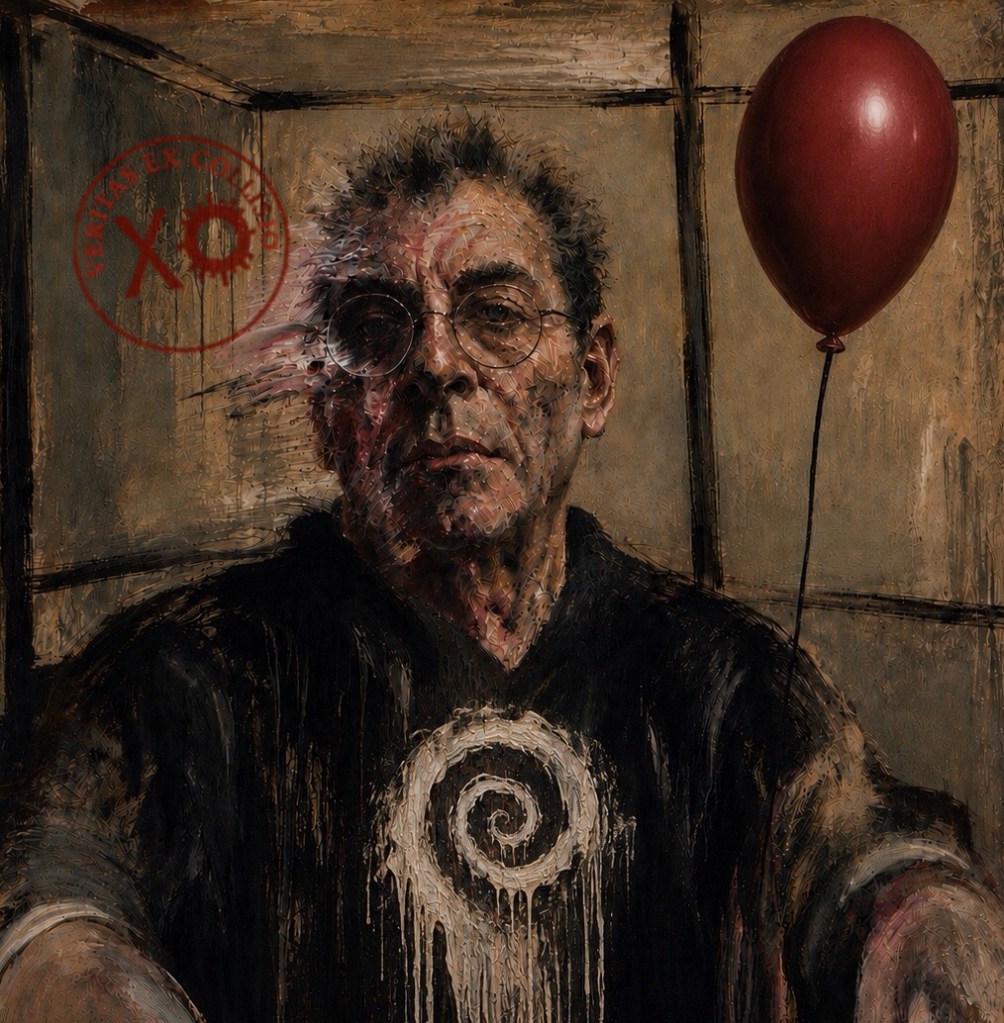
Paul Woodford.
Department of Visual Paradox and Pataphysical Research.
Research Lead, Collision Studies.
Paul holds an MA in Contemporary Dialogues (Fine Art) from Trinity Saint Davids University, Swansea. His research explores the conversational space between conceptual practice and poetic disorder. Within the department, he directs the Colliders fine tuning – guiding experiments and leaking notes and observations where appropriate. Website: excollisio.com

