Editor’s Note: I met Karl Tierney (1956-1995) in the autumn of 1980 during my first semester at the University of Arkansas, Fayetteville. We were both MFA candidates in the Arkansas Writers Workshop program. Karl was tall, slender, soft-spoken, and witty. In a writing program dominated by hard-drinking, pool-playing male poets, Karl stood out. He was gay, sensitive, funny, and sophisticated – a bon vivant. His work, often featuring queer themes and classical references, was ironic, linguistically rich and textured. Karl had arrived at Arkansas having completed a BA in English from Emory University in 1980, and he approached the task of working to secure an MFA in Creative Writing with focus and serious intent. We did a reading together at Hays and Sanders bookstore sometime in 1983, and Karl finished his degree. He came to tell me goodbye before leaving Fayetteville, saying he was headed to San Francisco. I had a sinking feeling in my stomach when he walked out the door. I was worried about Karl’s risk of AIDS based on what I had surmised about his personal life. In 1982, the Centers for Disease Control had given a name to an immune system disease (Acquired Immunodeficiency Syndrome or “AIDS”) believed to be transmitted through sexual contact, blood exposure, shared needles, and possible mother to infant transmission.
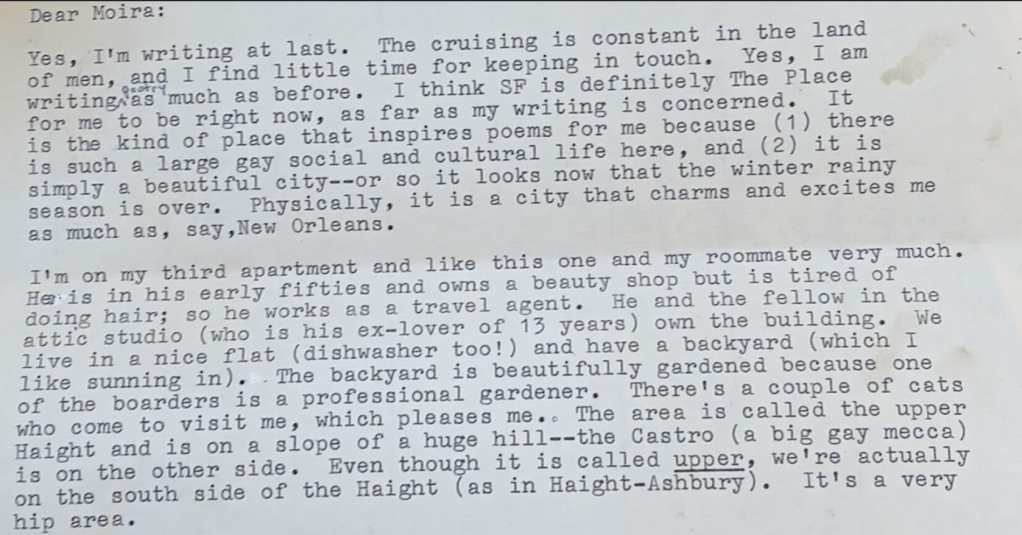
Karl sent me a letter in May, 1983 describing his new and exciting life in the upper Haight near the Castro district. San Francisco was by then one of the epicenters of an emerging epidemic with hundreds of reported AIDS cases, particularly in the Castro and surrounding neighborhoods. The chatty, gossipy letter from Karl was the first and last time I heard from him. It is my understanding that Karl became symptomatic for AIDS in 1994 and took his own life the next year after being told – mistakenly – that he had not been accepted into an AIDS medical trial. I saw the book cover for Have You Seen This Man: The Castro Poems of Karl Tierney (Sibling Rivalry Press, 2019) with my friend’s face in a Twitter post. It was only then that I discovered what had happened to Karl. I was and remain devastated by the tragic life trajectory and early death of this immensely talented poet and friend. As the executor of Karl’s estate, Jim Cory granted an interview to Ice Floe Press and give us permission to publish eight previously unpublished poems and the images. – Moira J Saucer
Process Statement
Publisher’s Weekly (Sept. 11, 2019) called Karl Tierney’s posthumous collection, Have You Seen this Man: The Castro Poems of Karl Tierney “an overdue introduction to an important voice in American poetry.” Patrick Nathan in an essay for the Poetry Foundation (Oct. 21, 2019) wrote, “At the height of the AIDS crisis, Karl Tierney wrote dark and radiant poems about queer life. Then he vanished.”
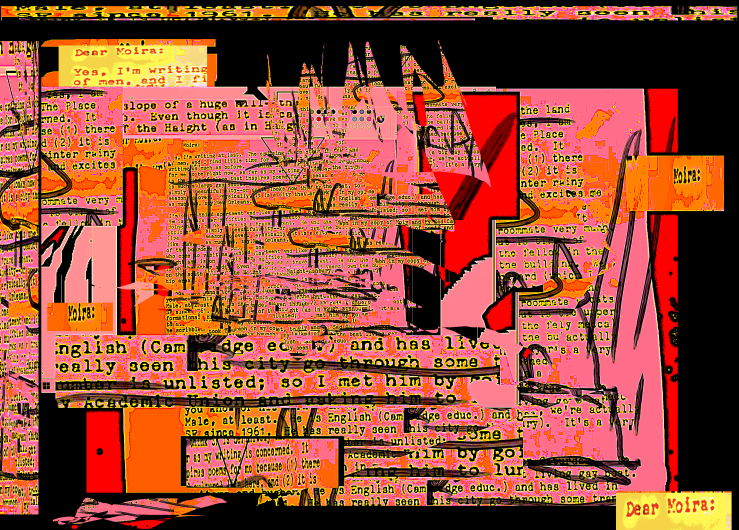
Ice Floe Press has assembled this collection of elements to bring attention and visibility to this remarkable poet and his editor and executor, Jim Cory. This conclave contains an interview by Moira J. Saucer with Jim Cory around the time of the publication of Karl’s only full-length collection, published by Bryan Borland at Sibling Rivalry Press. We have also chosen to feature some photos of Karl, eight of his previously unpublished poems in a separate pdf file, and a new visual poem by Robert Frede Kenter, based on the 1983 letter from Karl to Moira J Saucer. Karl was a singular poet, under-published in his lifetime, whose life was cut short by HIV-AIDS. He died by suicide at age 39 in 1995, jumping from the San Francisco Golden Gate Bridge. Ice Floe Press had originally intended to publish this feature in 2019 in conjunction with a live reading event at Knife/Fork/Books in Toronto, Canada. Unfortunately, COVID and subsequent health crises interrupted our plans, and publication eluded us as we sought the best opportunity and platform to showcase the interview and poems.
Karl Tierney was witty, sardonic, and acutely aware of the contradictions and tensions between poetry and institutional careerism and disenchantments of American life. We hope you find this conclave of elements celebrating Karl Tierney’s poetic legacy evocative and insightful. Sadly we also have to report that Jim Corey, himself, passed away in 2024. Blessings – Moira and Robert.
From Karl Tierney to Moira J. Saucer (A Vispo from a Correspondence): Version 2 – Robert Frede Kenter
8 Poems by Karl Tierney
(Previously Unpublished)
Moira J. Saucer Interviews Jim Cory about Karl Tierney
You are a writer in your own right. Please tell us a little about your literary career.
I’m 66 and published my first poem at 20. My poetry career has always existed outside the world of education and teaching and, before retiring a few months back, I worked in publishing to support myself. I’ve published a dozen or more chapbooks, I’ve lost count, but not a full-length book of poems. I’ve also reviewed books and published essays and short stories.
When/how/where did you meet Karl Tierney?
It would have to be a guess, not only because it’s half a lifetime ago and faces and circumstances fade or otherwise come in and out of focus, but also because Karl, in person, did not make an immediate, vivid impression. He was the opposite of loud, forceful, and insistent. That is, he was low key, not the type to raise his voice. I believe Phil Willkie, who published a gay literary magazine called the James White Review, introduced us at a writers’ conference sometime in the late ‘80s. It proved fortuitous. Each of us recognized the other as a kindred spirit. We weren’t mainstream and we weren’t college teachers. We were also interested in many of the same poets and eager to make a reputation. Karl especially. Our relationship was about mutual support. For instance, after Karl was accepted at Yaddo in 1993, he urged me to apply immediately, which I did, and then I went there in 1994 and we had a trove of Yaddo gossip to feast on in calls and letters.
Can you tell us about Karl’s involvement and engagement in the literary and social life of the Castro? In addition to being involved in a men’s poetry group, were there other activities in which Karl participated?
I’m not the best source on that, as I was always in Philadelphia and my interactions with him in San Francisco were limited, though we did three readings together in San Francisco in the ‘90s. I spent the fall of 1989 in San Francisco, right after the October earthquake, and Karl and I often hung out in the Café Flore, chock full of writers and wannabes. Karl lived for gossip. I remember discussing the vanities of Harold Norse—an ill-fitting toupee among them—and Thom Gunn’s “casting couch.” “You must be droll, or caught by the troll!” he wrote, in one of his first San Francisco poems. He was. Droll, that is. A dry wit, equal parts irony and sarcasm, directed at enemies real or conjured. He didn’t strike me as an immensely social being. He had politics. He despised the powerful—the poems make that clear—but he was also skeptical of the left’s ability to challenge that.
I don’t recall talking much, either in person or in letters, about AIDS. He’d arrived in San Francisco in 1983, just as AIDS was morphing into an epidemic. By 1985 more and more gay men were getting sick. No one knew where it would stop. If Karl got involved in the volunteer organizations that cared for the sick, delivered meals, that sort of thing, he didn’t mention it. He was just not a joiner. Writing poetry is a highly individual undertaking and he must’ve realized how little time he had to accomplish the task he’d assigned himself. A dozen years is what it turned out to be.
Tell us about the process of compiling the poems for this book. How and why did you and later Sibling Rivalry Press get involved in the project?
In the second week of September 1995, I got a letter from Karl asking me to be his literary executor. It wasn’t a complete shock. In letters that spring he’d informed me that he’d become “symptomatic” and was being treated for AIDS. At the time, no effective treatment existed, so we both knew the clock was ticking. When I got his letter, I immediately picked up the phone and called. I asked how serious his illness was. In a tone resembling that of someone yawning, he replied: “Reports of my death have been greatly exaggerated.”
Karl could never pass on an opportunity for wit. He also simply didn’t want to get into the specifics of his illness. He never stated exactly how sick he was, and in way he was, whether that was Kaposi’s sarcoma, thrush, cytomegalovirus, any of the various infections green lighted by AIDS.
It didn’t strike me as odd. A lot of people with AIDS refused to talk about what was happening to their bodies. Fear does that. You learned to let people signal what they were comfortable talking about and what they weren’t. On top of everything else, they didn’t need some social blunder putting them on the defensive. Dealing with people who had AIDS called for sensitivity. That’s something you learn by making asshole mistakes.
A month or so after I got the letter requesting that I be his executor, I received a call from Karl’s mother, Karline Tierney, asking if I’d heard from him. Karl, she said, had been out of touch for a week. Ten days? I knew, as soon as I hung up, that he was dead. People rarely just disappear. Shortly after that, Karline and her husband went to San Francisco to look for him. They put up Missing Person fliers all over the place. Then they got the key from his landlord. When they went into Karl’s apartment, they found, on the kitchen table, his drivers license, wallet and a farewell note. The note was beyond sad. I read it and burst into tears.
A few weeks later five boxes of his papers arrived at my apartment in Philadelphia. I had read his poems over the years, in magazines and in the letters he sent, but I had no idea he’d finished that many. They were organized alphabetically in file folders. Each folder contained multiple drafts, each draft dated, so that, in the event there was no version labeled “Final,” it was clear what the final version was.
I started sending out poems maybe six months later. Some magazines were receptive to his work. The most encouraging was one out of NYC called Skidrow Penthouse, edited by Rob Cook and Stephanie Dickinson. A 24-page section in their third issue contained eight poems by Karl and an essay about, by me, his work. Rob Cook asked me to send him a copy of the complete collected manuscript and he used more of Karl’s poems in later issues. Many.
It’s easy, as an executor, to feel that you’re swimming upstream. People like Rob and Stephanie help overcome that. Besides Skidrow Penthouse, Court Green, edited by David Trinidad, and the James White Review, featured posthumously published poems of Karl’s.
Of course, the goal was to get a book into print. That proved far more difficult. Publishers can include poems by the deceased in a magazine and if the work’s strong, it adds to the issue’s overall luster. Book publishers, however, have an intrinsic handicap. John Martin, at Black Sparrow press, told me, around that time, that he had a hard enough time getting his living authors to promote their work. “How am I going to get a dead one to do it?”
I understand the argument and it’s legit. Why waste resources on books that won’t sell because no one’s there to push them?
So for about 15 years, even while publishing the occasional poem or group of them in print or online magazines, I racked up a dozen or more rejections from book publishers, including the University of Arkansas Press. U. of Arkansas Press had, in fact, published two posthumous books by alumni, one of them Frank Stanford. But by the time they got the manuscript of Karl’s book there had been regime change. Miller Williams, whom Karl had studied under and who was influential in deciding what was published at the press, was gone. His successors had other fish to fry.
On we worked and waited for the light. Around 2016 I hired a very smart guy named Brandon Holmquest to work with me on the manuscript, narrowing it from a collected to a selected and overhauling the introduction. A selection, I realized, stood a far better chance of being accepted for publication. I also determined to make it clear to publishers that I, as the executor, would happily undertake all the promotional work connected to the project.
Miracles, when they happen, arise out of the everyday. Quite by chance, Bryan Borland, of Sibling Rivalry Press, happened to come across some of Karl’s poems I had gotten published in an early issue of Court Green. He flipped back to the bios. The bio stated that Karl was deceased but that a full-length book manuscript was available for publication. It provided contact info. One morning in May of 2018 an email appeared in my inbox. The subject line read: “Karl Tierney Poems.” I looked at it and thought: whatever this is, it can only be good.
I already knew Bryan from a magazine he’d published called Assaracus. He wanted to know if the manuscript was still available. Could he see it? Two hours later he emailed their acceptance and a day after that, a contract arrived. I forwarded the contract to Karline, by then 94, so she would know that at last this was happening. So many people in the poetry world are all about themselves. It’s me, me, me, me, me, me, me. Bryan and Seth are about poetry, literature and community. They’re a class act. Sweet guys who are highly creative and total professionals. There was at times an almost eerie synchronicity to project. And a sense of deliverance. It still blows my mind to think about it.
Frank O’Hara was clearly one of Karl Tierney’s literary influences. Did he ever talk with you about O’Hara or other poets and writers that he admired?
Karl rarely talked about literary influences. I remember in the fall of ‘89, in San Francisco, when I often hung out with Karl. I carried Paul Auster’s anthology of Twentieth Century French Poetry with me and studied it, like sacred text, at any opportunity. He had little interest in those poets. His models were the modern and post-modern American poets. And it’s hard to know or say exactly which ones because in our correspondence, he was far more inclined to dish those he didn’t like than to praise those he did. He was a skeptic. He also did not want to open up his process to casual scrutiny. Why give the game away? For instance, I don’t recall him ever talking about O’Hara. That’s completely in character. If he’d suddenly started praising “Homosexuality,” or “Why I Am Not a Painter,” it would’ve seemed odd, unKarl. He told my boyfriend at the time that he admired my enthusiasm, and that’s probably because enthusiasm was not in his nature. Clearly, though, O’Hara’s ability to report, poetically, on what was happening, and what he thought about what was happening, on the streets, at parties, and in bars, and take that data and transform it into crisply polished texts that wore their French influences lightly if not altogether invisibly, this was something he made use of. He emulated O’Hara, though not in any obvious way. He didn’t sound like him, he sounded like himself talking across a table at the Café Flore. But he writes about his San Francisco circle, the life of the street, etc. in much the way O’Hara wrote about New York. A casual tone that bristles with sophistication. He did something similar with Catullus. In one poem, for instance, he virtually re-writes and updates a famous Catullus piece. Catullus’ direct-address poems provided the model that Karl uses to take down enemies and mock the pompous.
Karl often adopted a breezy, witty style in his writing. This was a quality that he evidenced in his earliest days at the University of Arkansas Creative Writing Program. Do you have any favorite poems that speak to this distinctive quality?
It’s odd when you read the same poems again and again, especially out loud, because what you find is that you discover nuances that were entirely opaque at first. It’s a process much like interpreting a musical score. “Breezy” and “witty” are front and center. One of my faves is “Clone Nouveau,” wherein a kind of gay male Valley Girl voice describes a pair of Castro Clones spotted in a coffee shop, all the more startling considering that AIDS is the backdrop:
“I mean the very shock of it
all the 70s clone types dead
and this
in the midst of my mourning”
His great gift was irony. He used it to find a way to laugh at AIDS, to scoff at the terror, at a time when someone desperately needed to do that because gay poets were not. Another one that cracks me up every time I read it is “Brutally Honest.” This was an expression that found favor in Twelve Step meetings, which we both attended. Essentially, it means permission to be blunt with those who are bullshitting. Karl uses it to read a suitor in a way where the cruelty is calculated to draw laughs. He wrote to produce effects, and the effects were typically levity.
Can you share your thoughts about the “special” poetic qualities that make Have You Seen This Man: The Castro Poems of Karl Tierney stand out from the hundreds of collections published every year?
First is its wit. Dry doesn’t quite get it. Arid might be more accurate. Being funny in print is one of the hardest things for writers to master. It’s also hard to just be yourself on the page. I doubt that Karl set out to be a humorous writer but by being himself, in the writing, he produced comedic effects. Funny is who he is. And like any skilled comedian, as many times as he takes shots in these pages at people he dated and dumped, or who dumped him, snubbed him, cut him or clashed with him, he also mocks himself, disparages his own ultimately unsuccessful effort to find someone, which is what he came to San Francisco to do. It was the perfect set up for irony, defined as “a state of affairs or an event that seems deliberately contrary to what one expects and is often amusing as a result.”
What also sets the poems apart is their value as historical documents. The Castro, this gay male community with its own politics, media, culture, was something totally new. Francis FitzGerald outlines this in her great, long essay about the Castro in the book Cities On A Hill. Enter the AIDS virus and everything starts to unravel. In the middle of it all is this poet who’s come to there to find love, like so many others, and who now finds himself witness to this macabre scene of slow-moving death. Which is what it became for 20,000 gay men in the Castro.
Do you consider Karl a uniquely American writer? If so, in what ways?
His poetic mode, his references, his outlook, all of that, the sum total of characteristics that make up the tonal quality of his writing, is thoroughly steeped in Americanness. His models were, all of them, in the American tradition. Would that have changed had he lived? No doubt. His outlook, too, rose up out of the kind of despoiled optimism we Americans cultivate like weeds. Imperial America looted the world and dragged the booty back. The result is this place where there’s wealth without taste, leisure time but nothing interesting or constructive to do with it. Karl was a bit obsessed with this contradiction and one of the titles he gave to a full-length book manuscript he was circulating to magazines and competitions was “Consumption,” a typically double-edged sword of a title referencing both the 19th Century term for (then incurable) tuberculosis, and the American tendency to burn through goods and services, paid for by personal, commercial, corporate and government debt. It’s why he often invoked Rome and its history, its slow motion collapse, for purposes of analogy. In that sense, his project is a typically American one: since there’s little in the way of a culture here, write about the freak show born out of its absence.
Karl’s mother has been supportive of this project. Can you speak to her interest in her son’s legacy?
It would’ve been just about impossible to have published his poems, and this book, without her encouragement and her practical help. She arranged to have his papers shipped, in five cartons, from San Francisco. She then worked with me, literally at my side, in organizing Karl’s writing, setting up working folders, producing final finished versions of poems that could be sent to magazines and later, arranged as a book. When all this started, she was already 70, and her husband was alive. He’s long gone. Through the years we communicated regularly, either by mail or, later, by email. I was delighted to be able to send her copies of magazines with Karl’s poems, or links to online publications that published them. I believe she took heart from the fact that his name and work remained alive. I contacted her immediately on receiving acceptance from Sibling Rivalry, and forwarded the contract so she could see it with her own eyes, which, at 94, weren’t so great because she suffers from macular degeneration.
Karl leapt to his death from the Golden Gate Bridge in 1995 after an AIDs diagnosis in 1994. Were you aware of his health status and were there warning signs? What would you have said to him if you had known he was planning to end his life?
It’s complicated. He wasn’t the only gay man in San Francisco with AIDS to jump from the bridge. Many chose to take their lives rather than put themselves through the horrors of that disease in its last stages. At the time of his death, he had already had AIDS for almost a year. He’d informed me, in a letter that spring, several months before, that he was “actively symptomatic.” To me, his use of the medical vernacular signaled a reluctance to discuss specifics. He never said: “I have KS lesions on my back.” Or: “I was rushed to the ER with pneumocystis.” Having a mortal illness puts many people in an altogether different frame of mind than that which those of us who are lucky enough to be healthy enjoy. He didn’t want to talk about symptoms, because to talk about symptoms meant to sooner or later talk about dying. Who wants to talk about their own death? So I didn’t ask. I decided to let him volunteer whatever information he felt comfortable relaying. Which was little to none. When the letter came asking me to be his executor, I assumed that things had taken a turn for the worse. But when I called, which I did immediately after I’d finished reading the letter, he not only laughed it off, he moved the conversation away from the topic altogether. None of this was new territory, because, as gay men in the year 1995, we’d watched, for ten years, friend after friend die. He saw death as just around the corner, and knew all too well what it would be like.
The terrible irony, a cosmic joke really, is that right around then, at the end of the summer or in early fall, he’d been advised by his doctor to apply for a trial group that was testing a new therapy called Protease Inhibitors. The so-called Cocktail—a mixture of different drugs—soon proved the first effective treatment. It saved the life of one of my closest friends, who was in an even worse situation. But after submitting an application, Karl was told he didn’t qualify for the trial. When his mother went into the apartment, after his death, maybe six weeks later, she played back the messages on his answering machine. One was from his doctor, saying there’d been a mistake in evaluating his application and that he was, in fact, eligible to participate in the Protease Inhibitor trial.
PHOTOS OF KARL TIERNEY
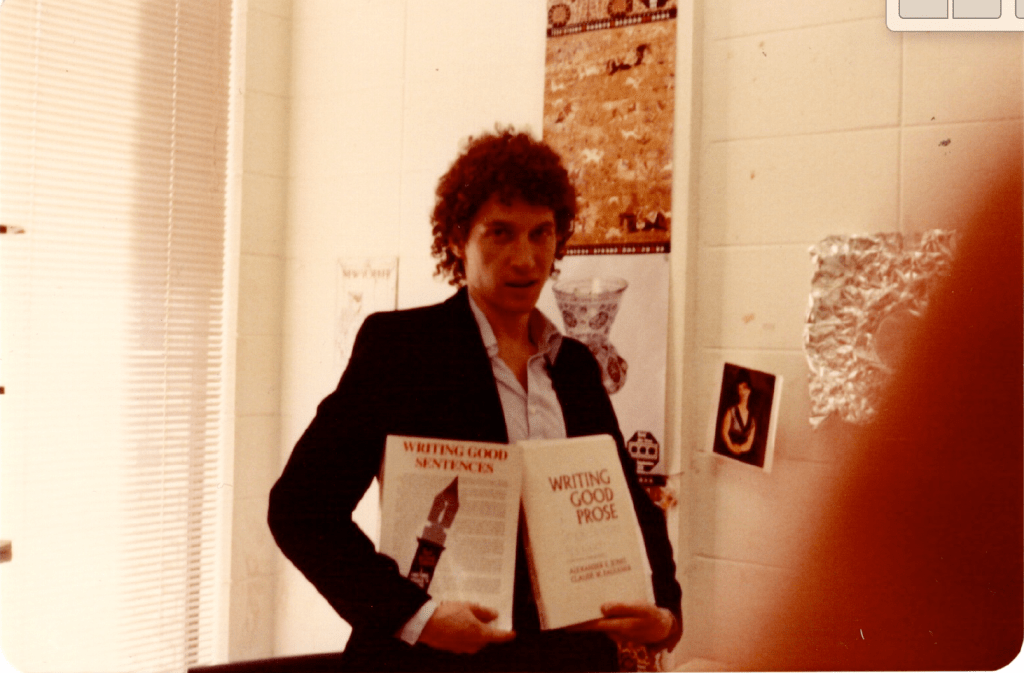
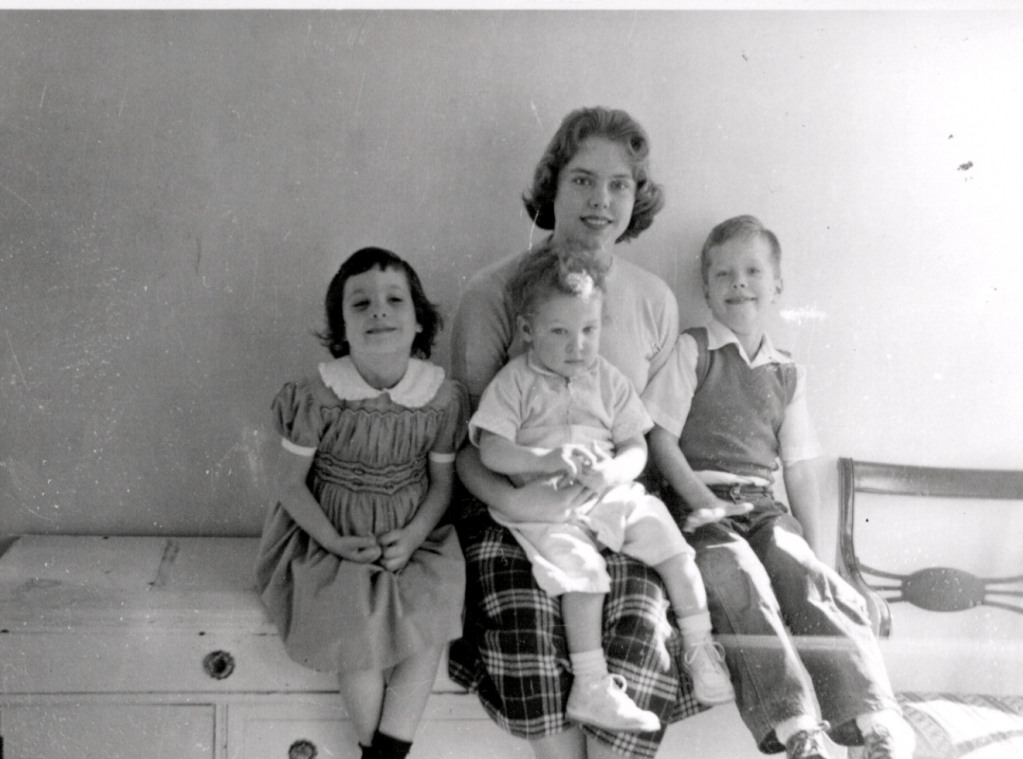
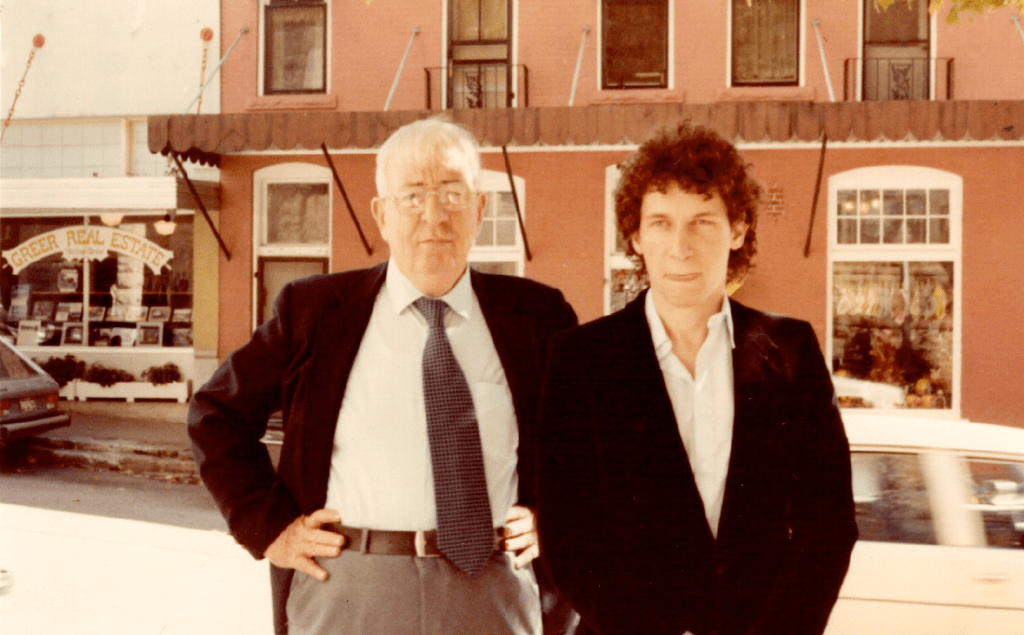
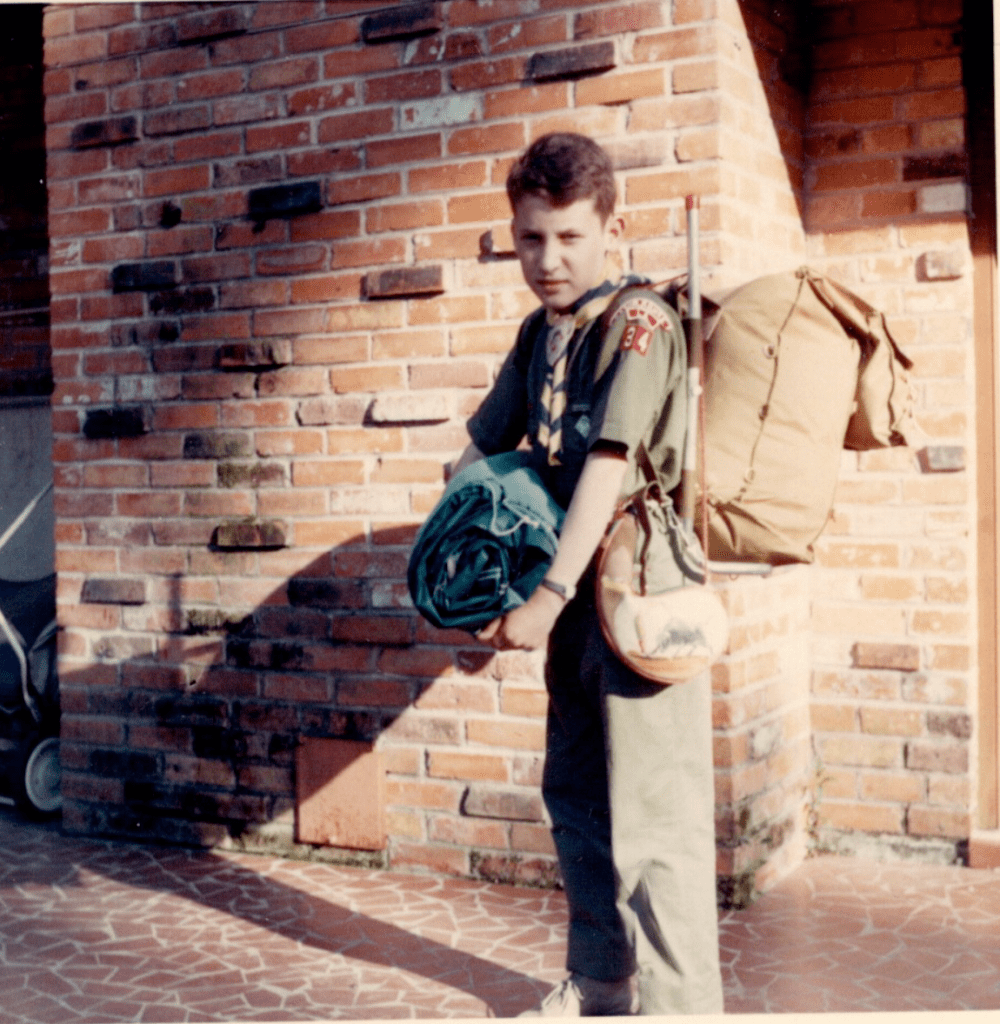
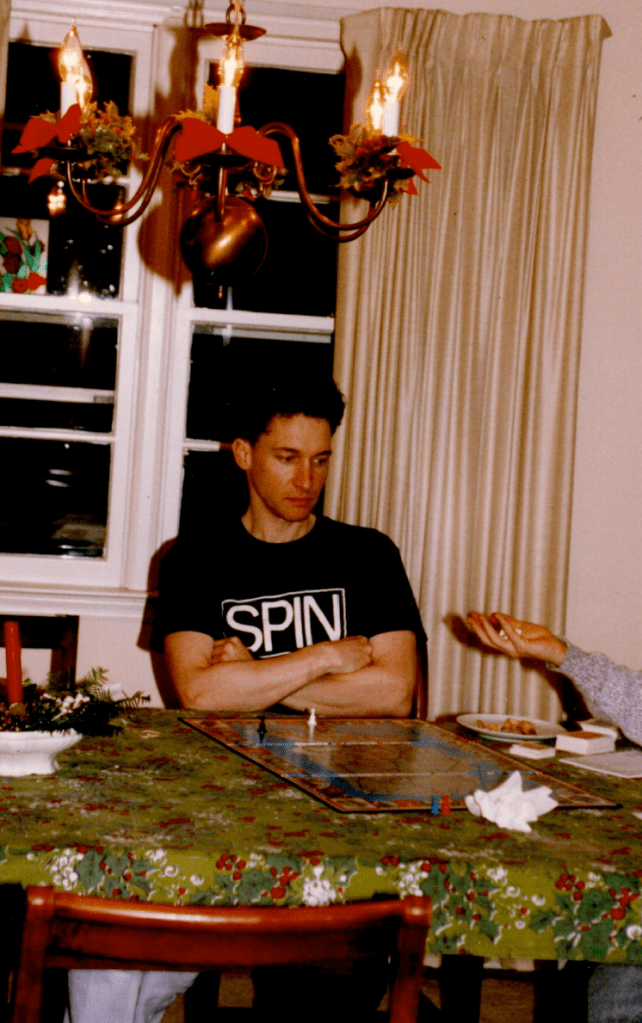
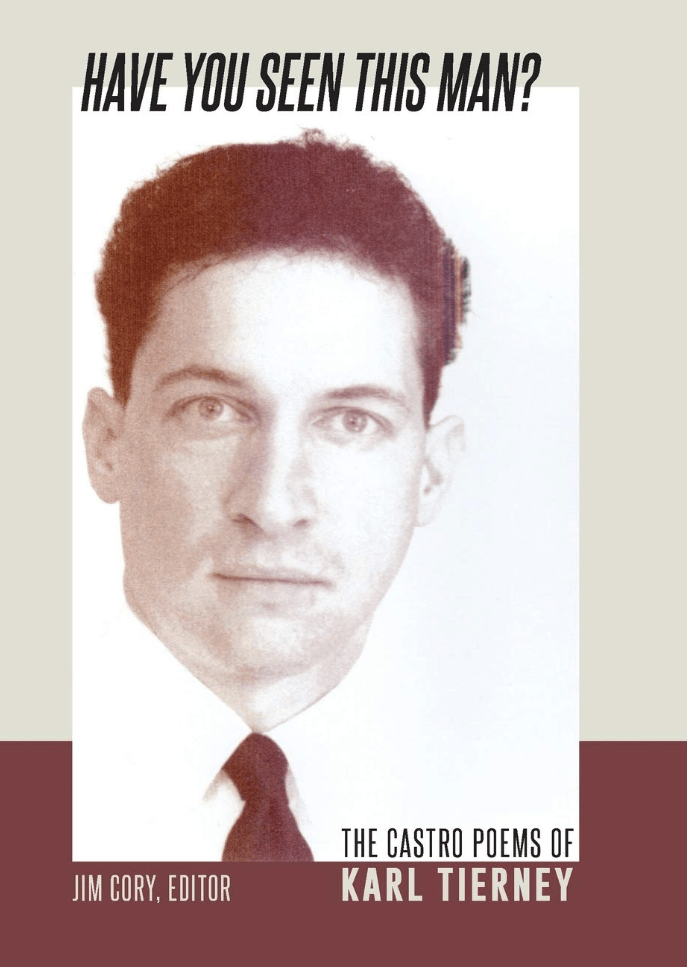
Photos: Top Left to Bottom Right:
1. Karl Starting MFA Graduate School U. of Arkansas.
2.L.R. Mary Claire (sister), Karl (age 2), Claudine (Fr. exchange student), Marty (brother).
3. Karl & his Dad, 1981.
4. Karl in Baton Rouge, April, 1968.
5. Karl w/Aunt Jane, Ct., 1991.
6. The cover of The Castro Poems of Karl Tierney, Jim Cory, ed. (Sibling Rivalry Press, 2019).
Select Bibliography of Karl Tierney
Bios
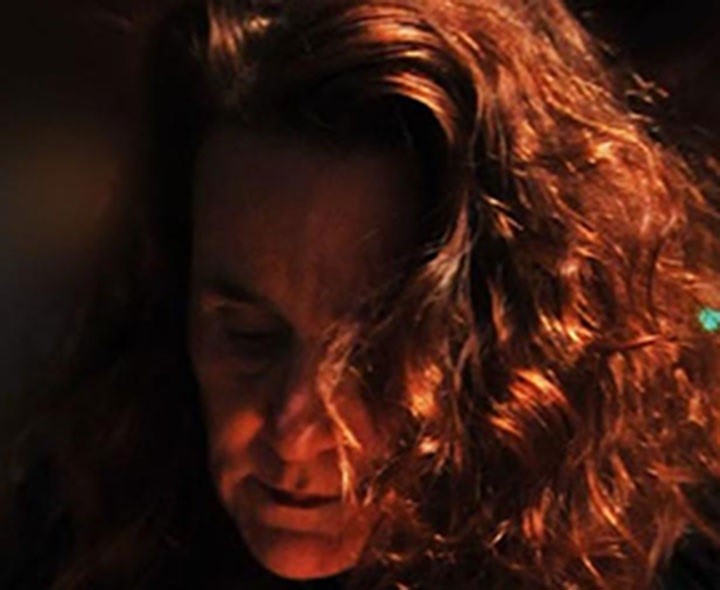
Moira J Saucer is a disabled poet living in the Alabama Wiregrass. She holds an MFA in Creative Writing from the University of Arkansas, Fayetteville. Her worked has appeared in literary magazines and anthologies in the United States, the United Kingdom, and Canada including Black Bough Poetry Freedom- Rapture anthology, Visual Verse, Fly on the Wall Press, Ice Floe Press, Mooky Chick, Floodlight Editions, and Fevers of the Mind Poets of 2020. Moira is the Managing Editor of Ice Floe Press.
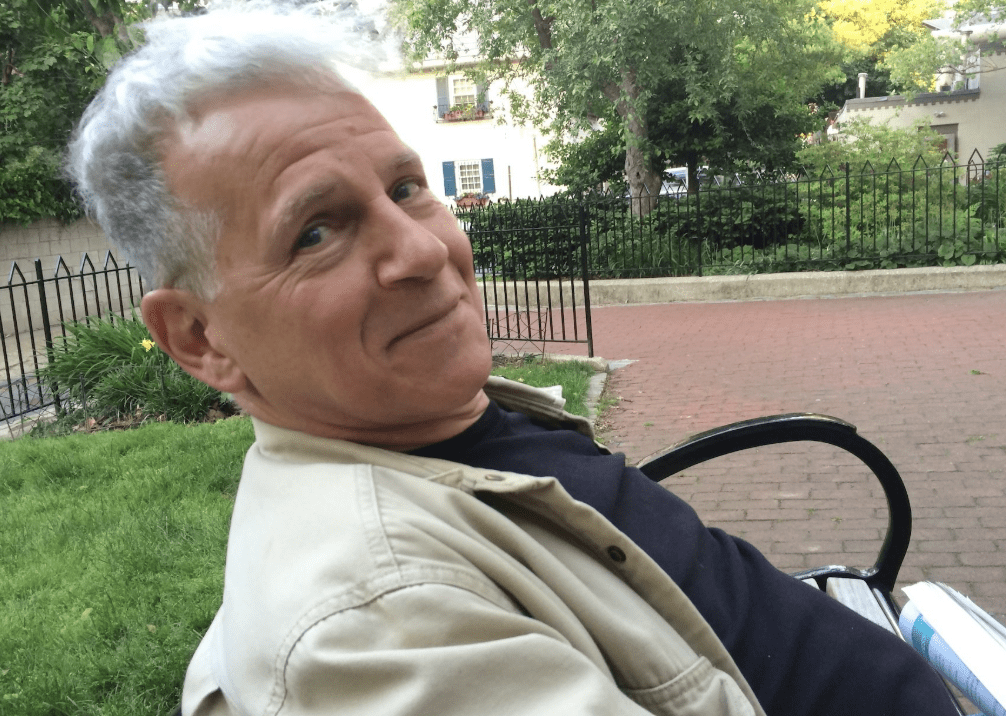
Jim Cory (1953-2024) was a noted American poet, fiction writer and editor interested in history, ornithology and architecture. He reviewed books for newspapers, penned essays for print and online publications (including the Gay & Lesbian Review, and Chelsea Station), authored numerous chapbooks of poetry, established a poetry publishing cooperative in Philadelphia and edited the works of important American post-modern poets including James Broughton (Packing Up for Paradise, 1997, Black Sparrow Press) and Jonathan Williams (Jubliant Thicket, 2005, Copper Canyon Press). In 2019 he assembled for posthumous publication the volume Have You Seen This Man? (2019, Sibling Rivalry Press), a selection of poems by his late friend Karl Tierney, an important part of the 80’s/90’s poetry scene in San Francisco’s Castro neighborhood. Jim was the recipient of grants including Pennsylvania Council on the Arts, and was a fellow at Yaddo and MacDowell colonies.
Karl Tierney was born in Westfield, Massachusetts, in 1956 and grew up in Connecticut and Louisiana. He received a Bachelor’s Degree in English from Emory University in 1980 and an MFA in Creative Writing from the University of Arkansas in 1983. That same year, he moved to San Francisco. Karl was a two-time finalist for the Walt Whitman Award, a finalist for the National Poetry Series, and a 1992 fellow at Yaddo. Though unpublished in book form during his lifetime, his poems appeared in many of the best literary magazines of the period, including the Berkeley Poetry Review, American Poetry Review, and Exquisite Corpse. He published more than 50 poems in magazines and anthologies before his death. In December of 1994 he became sick with AIDS and took his own life in October of 1995 by jumping from the Golden Gate Bridge. He was 39 years old. His posthumous collection, Have You Seen this Man? was edited by Jim Cory and published by Sibling Rivalry Press, 2019. Sibling Rivalry Press: https://www.siblingrivalrypress.com/.
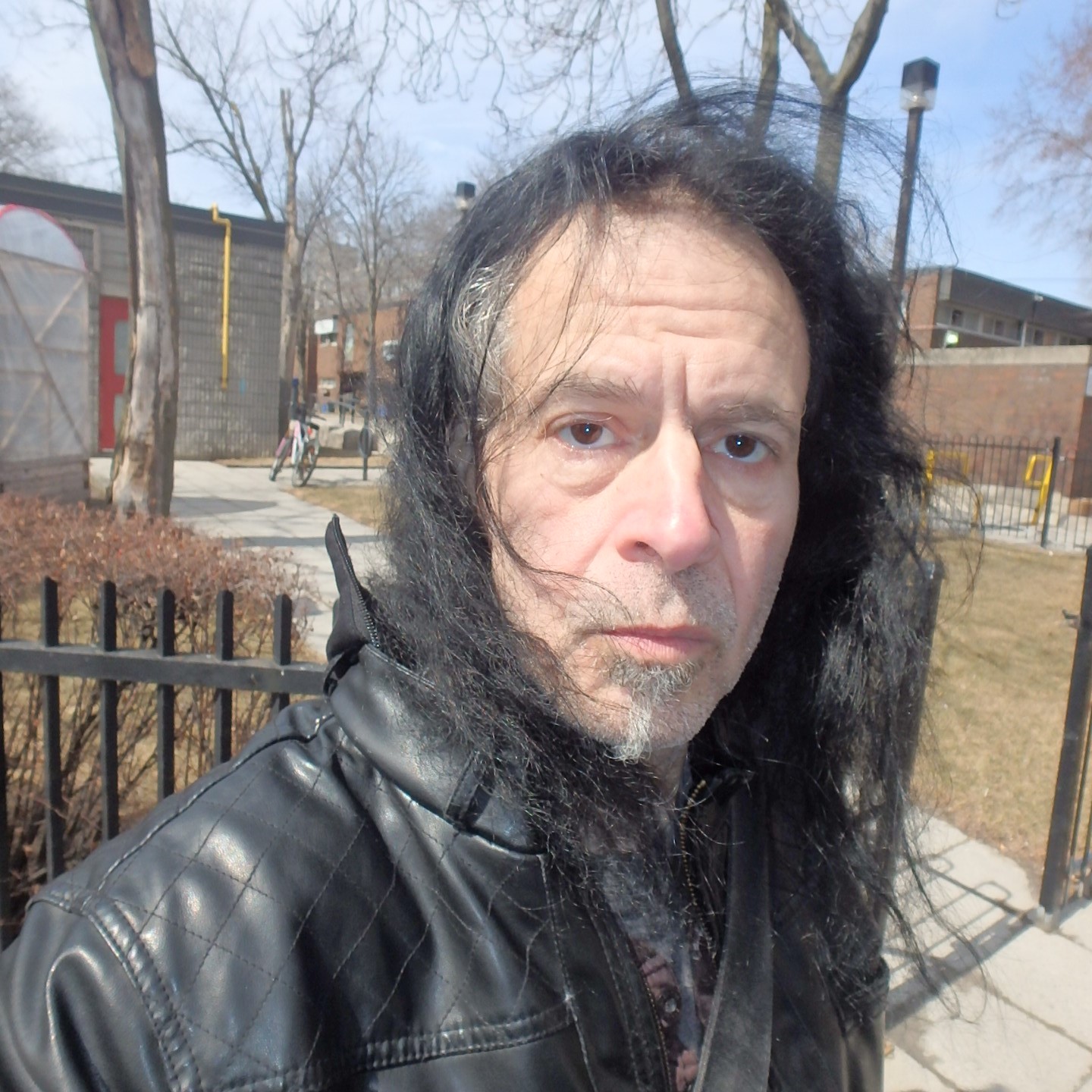
Robert Frede Kenter is an award and prize winning writer, visual artist and performer, and the EIC/publisher of Ice Floe Press, and co-curator of PROCESS series with the writer/musician Vikki C. Robert’s work is published widely in journals and in books, internationally, including ballast, burning house press, ABR, Storms Journal, Sedserio, Blood & Honey, Anthropocene, Watch Your Head, Pinhole, Paragraph, Otoliths, Lost and Found Times, New Quarterly, Grain . Robert’s books include Father Tectonic (EthelZine), In the Blueprint of Her Iris (with Vikki C.) (Ice Floe Press), Moon Writing (with Catherine Graham) Robert’s book design for Lynne J. Lampe’s Talk Smack to a Hurricane (Ice Floe Press) was a finalist in the Da Vinci Eye Prize from Hoffer Awards, 2023
 IceFloe Press