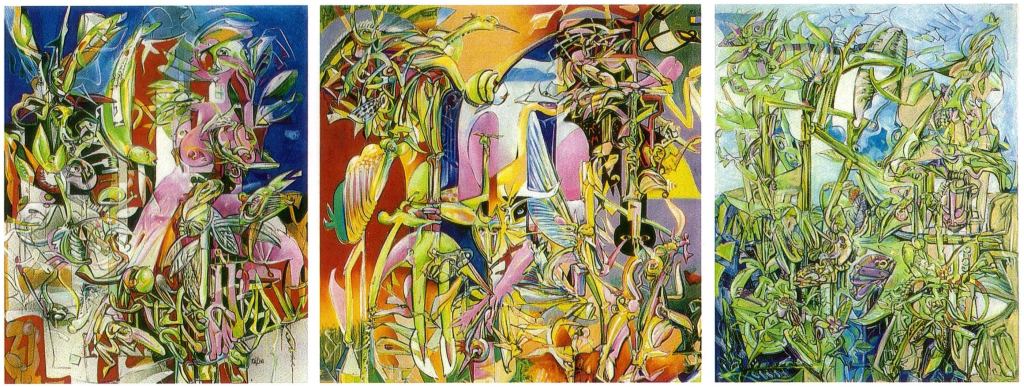
THE SECRET LIFE OF PLANTS
MOVING IN
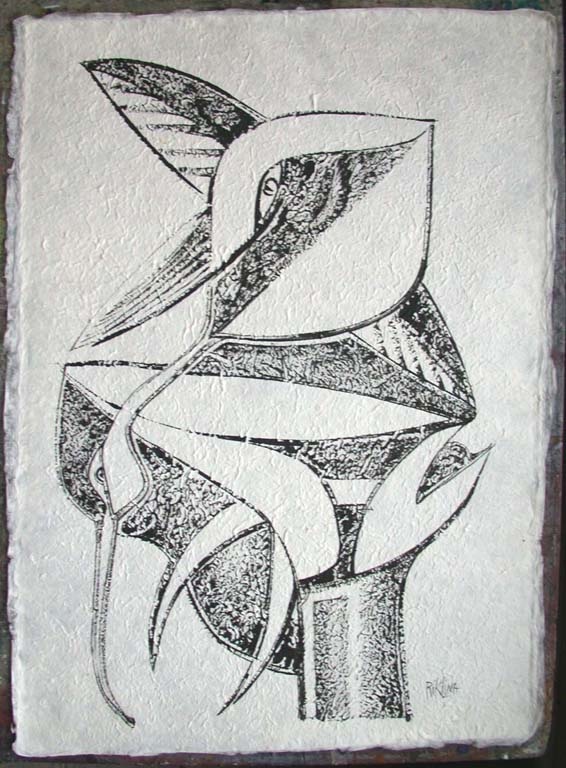
The mistress moved in in stages. She was careful to first appropriate each of the rooms that faced the street, decorating them just so, giving each the special touch that would bring the spaces, when considered together, closer to the notion of heaven that she had constructed in her mind, that first country of happiness.
Over the years, she had heard many stories about the house. Her belatedness and excessive care in settling in may have been her way of avoiding what lay in its back rooms, beyond the courtyard of the hôtel particulier. There was fear, also, strange and elemental, an inherited apprehension, the impatient pacing of ancient losses in her blood. Ghosts she hoped would scatter, once and for all. She kept her gaze firmly planted on what lay in front of her and opened the door.
BIRDS IN THE HOUSE
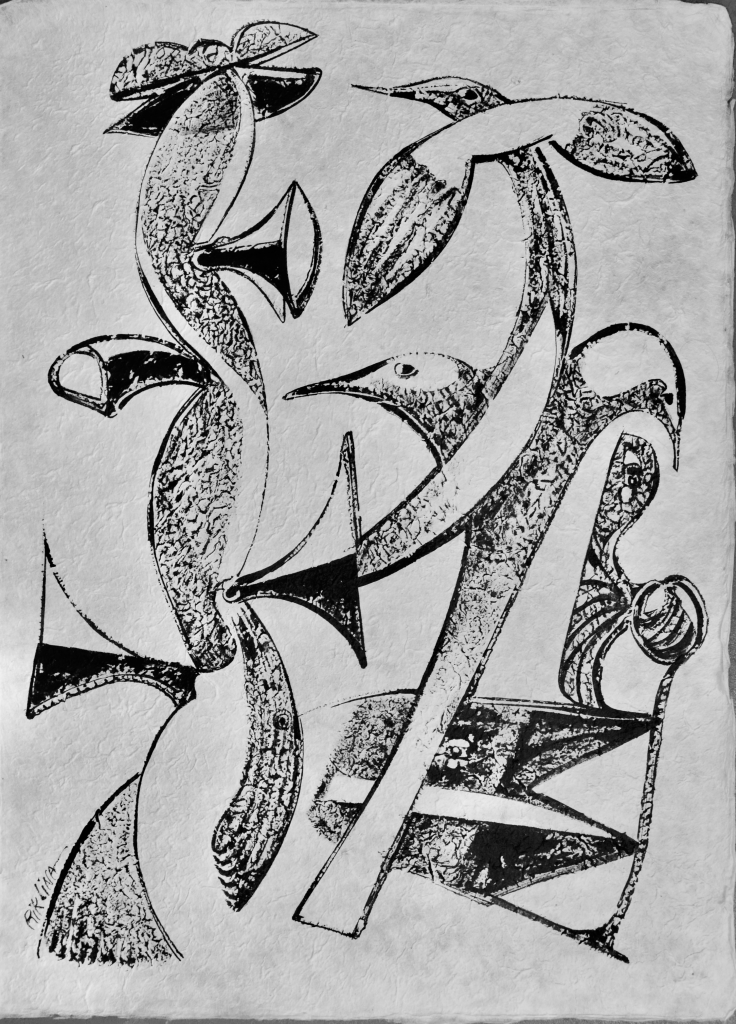
The rooms that harboured the birds had been elegantly fashioned by two aristocrats, Laurens and Frida. They were oblivious of their upbringing, and to the elegant mien it gave their movements. They assumed theirs was a common way of existing in the world.
In the couples’ care, all life forms flourished. Frida nurtured a bird that would have gone extinct were it not for her labours in preservation. Her avis sang in Middle and Old Gaelic, its warbles mixed with those of other breeds in the rooms.
Laurens, who also dealt in music, had invented a kind of notation where songs could be represented endlessly, visibly and invisibly. This magic he achieved by entering the worlds of other prestidigitators, frequent visitors of the house on the Rue du Château. They walked through the walls and spied on the inhabitants, hoping for insight into what gestated in the house, which had been transported by aerial means to the town of Bloemendaal, proving that it could exist outside of Paris, divested of its original boundaries on the Rue du Château.
THE BEGINNING OF LANGUAGE
When the night has passed by and heaven first begins
To blush and birds warble touched by the dew,
And the sleepless traveler rests his half-burnt torch…
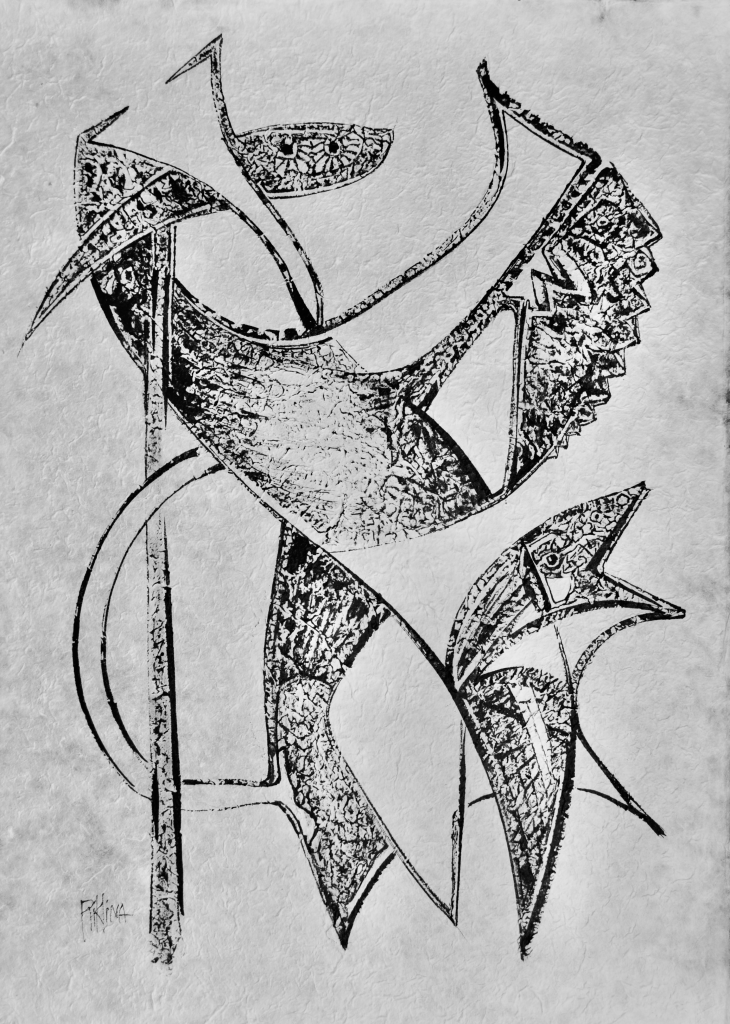
She suspected the writing was in a language different from hers. It was a language of images and symbols, which she came to understand after several months of pondering their shape and meaning.
Its welcoming message, the languorous tonalities of the Latin voice coming through the English, gave the poetry an ageless feeling, and reminded her of Rimbaud’s “Vowels.”
There was much in the string of words, including the relevance of dates, the beginning of months and years of happiness that announced themselves. She felt suddenly at home in the world, perhaps for the first time in several eternities.
She thanked the invisible hand that had carved the revelation into the walls. “April second, day of angels,” the mistress said to herself.
AUTHOR NOTE: BEATRIZ HAUSNER
Surrealists have always engaged in collaborative creation, in all manner of ways. In 1919 André Breton and Philippe Soupault created the first surrealist text, Les Champs magnétiques in collaboration. The Magnetic Fields is considered the inaugural application of automatic writing, exemplifying the sustained flowing of poetry-artmaking into life, and vice versa. Rik Lina and I first met in person at O reverso de olhar (The Inverted Gaze), an international surrealist exhibition organized by Miguel de Carvalho in Coimbra, Portugal in 2008. International gatherings of this kind afford surrealists the opportunity to engage with each other through collective artmaking and writing, readings, and inventing and playing games, such as the by now familiar, even trite, cadavre exquis. It was there that I first shared my writing of what became Enter the Raccoon, prompting Rik and Miguel that I write texts to Rik’s work. Rik Lina’s experience in working collaboratively with artists in automatist groups he’s lead, like CAPA, are legendary, so I welcomed the suggestion with enthusiasm and gratitude. Rik chose as the source material a large selection of black & white automatic drawings he titled The Secret Life of Plants, which he’d created during his time in the Dutch Antilles, a defining period in his trajectory. I very naturally began “riffing” off his automatic drawings. Something in the rhythm of Rik’s brushstrokes, the forms imprinted in him by what he saw, heard, and touched as a sea diver in Bonaire, and recorder of the jungles of nearby Saba, evoked in me characters moving in a parallel world. There is something incredibly liberating in Rik Lina’s work, which I identified with a life I would have wanted to live, specifically among the inhabitants of a house on Rue du Chateau in Paris, where many surrealists lived during the late 1920s and early 1930s. That is why The Secret Life of Plants can also be read as The House on Rue du Chateau, the title of a work in sixteen chapters from which these three collaborations are selected.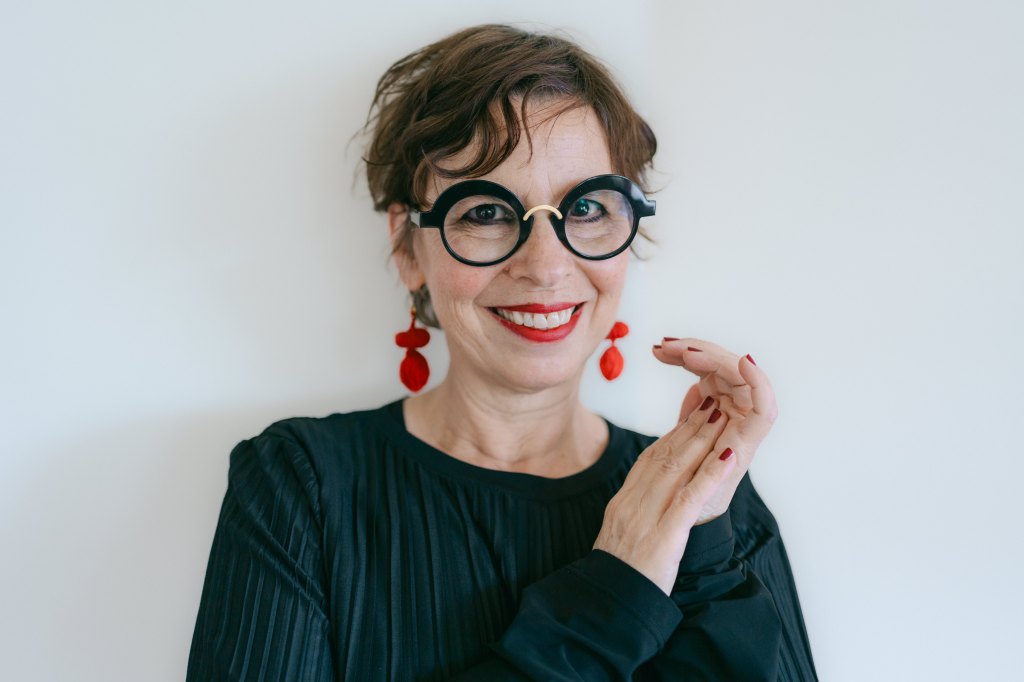
Photo (c) by María Vega
Beatriz Hausner was born in Chile in 1958. She has published several poetry collections, including Enter the Raccoon (2012), Beloved Revolutionary Sweetheart (2020) and She Who Lies Above (2023), in print by/from Book*hug Press. She has published many limited-edition chapbooks, including The Oh Oh, (above/ground press in 2025). Her books have been published internationally and translated into several languages, including her native Spanish, French, and most recently Greek. Hausner writes extensively about surrealism and has been a participant in the movement’s major events, exhibitions and principal publications. Her translations of Spanish American surrealist poets have exerted an important influence on her own writing. Hausner has edited several Canadian magazines, was a publisher of Quattro Books, and is the Editor of Someone Editions. Beatriz Hausner was President of the Literary Translators’ Association of Canada and Chair of the Public Lending Right Commission. She lives in Toronto where she publishes The Philosophical Egg and, with Russell Smith, runs the lecture series Soluble Fish.
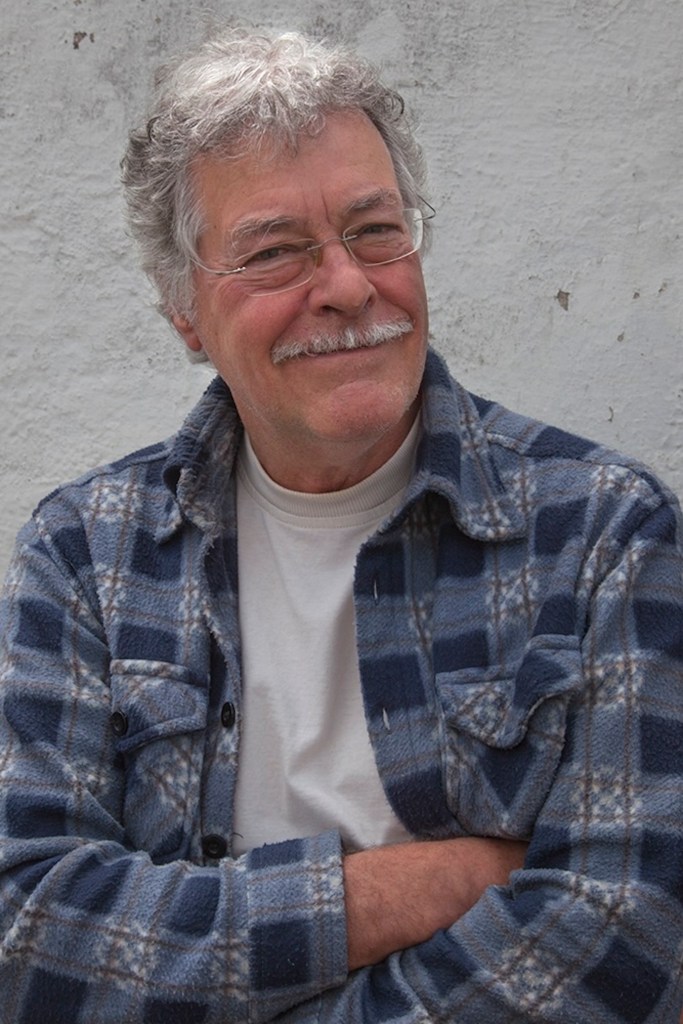
Photo (c) by Janice Hathaway
Born in The Netherlands in 1942, Rik Lina has lived and worked in several continents, shaping his life after Odilon Redon’s dictum, “Immerse yourself in nature!”, dedicating his art to the study of deserts, mountains, tropical rainforests, and coral reef jungles. His 1975 emigration to the Caribbean Island of Bonaire, coupled with the thousands of hours he logged in scuba diving and installing the Marine Parks there, in the island of Saba, and the Take Bonerate Archipelago in the Timor Sea, became the defining experience. His entire oeuvre expresses the poetry of pelagic realms, jungle life, and cloud forests, always in constant echo of his inner life. Rik Lina studied at the Rietveld Academy of Amsterdam (1961-1966). His work has been featured in countless solo and collective international exhibitions, including 80 in the context of surrealism. In 1968 he joined the BRUMMES BLONDES group and the PHASES movement. He is one of the founders of three international collective painting initiatives CAPA (Collective Automatic Painting Amsterdam, since 1991), the CABO MONDEGO SECTION of Portuguese Surrealism (since 2008) and CORNUCOPIA (since 2010). Rik Lina founded the anarchist/surrealist magazine DROOMSCHAAR (1990-1994) and has participated in the publications of contemporary surrealism, including Brumes Blondes, Phases, Ellebore, Debout sur L’Oeuf, A Phala, Punto Seguido, Derrame, Hydrolith, Salamandra, Alcheringa, Vocative, to name a few.
 IceFloe Press